Living off the Land

Thumbnail image for Survival Foraging: A Realistic Approach

Survival Foraging: A Realistic Approach

There are many edible wild plants. Leaves, shoots, flowers, berries, nuts, seeds, roots, and bark of different plants and trees can provide us with some form of sustenance at different times of the year. What’s more, foraging is fashionable, having featured on several TV programmes in recent years. Wild foods are even showing up on Read more >>

Thumbnail image for Boost Your Bushcraft With Urban Botany

Boost Your Bushcraft With Urban Botany

Urban Bushcraft is a phrase which appears to be gaining popularity. Certainly, I see and hear it more frequently now than a couple of years ago. In the UK 80% of the population live in urban areas *. It’s a similar story in other European countries – 77% in Spain, 74% in Germany, 83% in Read more >>

Thumbnail image for Red Currant, Ribes Rubrum

Red Currant, Ribes Rubrum

  Red currant, (or redcurrant), Ribes rubrum is a member of the Gooseberry family, Grossulariaceae . Its fruits are edible and it is relatively easy to recognise and distinguish from other species.   Geographic Distribution and Habitat Red currant is native to parts of Western Europe but is also widely cultivated, with some wild populations Read more >>

How to Avoid Mistaking Lily-of-the-Valley for Ramsons

Lily-of-the-Valley is a poisonous plant found in woodlands in the northern hemisphere, the leaves of which resemble Ramsons, the familiar wild food plant also known as wild garlic. Like Ramsons, Lily-of-the-Valley can form extensive… Read more >> Read more >>

Water Mint, Mentha Aquatica

Water Mint, Mentha aquatica has a wide distribution across Europe (except the far north), Asia and Africa. It is the most common of the wild mints in the British Isles but is less frequent in Scotland. It has a number of food and medicinal uses and is therefore a useful plant to know for foragers and those interested in bushcraft and survival. As its name suggests…Read more >> Read more >>

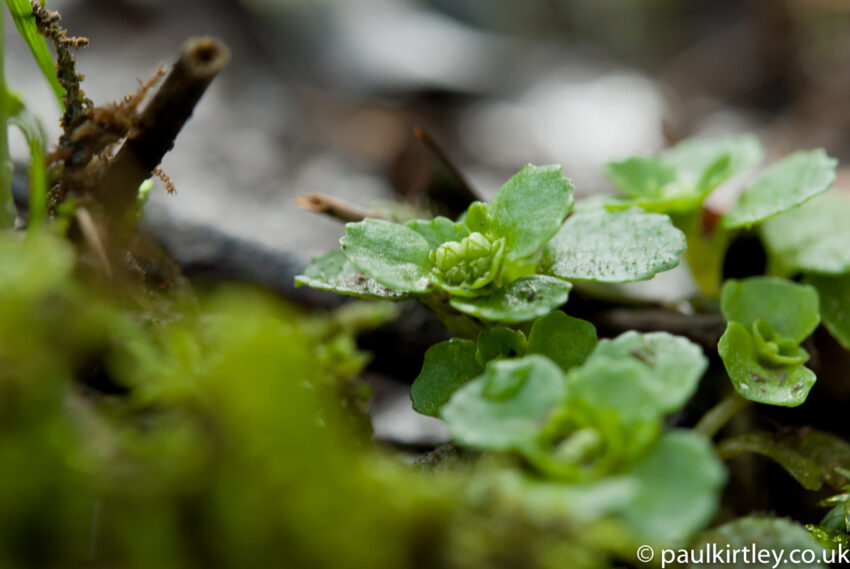
How to Tell the Difference Between Chickweed and Yellow Pimpernel

Yellow pimpernel, Lysimachia nemorum, is a small hairless plant, with leaves of a similar shape and size to those of Common Chickweed, Stellaria media. Common Chickweed is an edible wild green that… Read more >> Read more >>

An 80s Revival: Surviving with the Dartmoor Knife

The final production version of the Wilkinson Sword Survival Knife was something of a redesign of the original, officially renamed the Dartmoor Knife CSK185. The best way to review a piece of outdoor equipment, whether it is a knife or a canoe or anything else, is to go and use it for its intended purpose. So, it was thus I decided to get a good measure of the usefulness of the Dartmoor Survival Knife by heading out to the woods for a few days with little else to see how well this survival tool served me… Read more >> Read more >>

Hemlock, Conium Maculatum

Hemlock, Conium maculatum is a notoriously poisonous plant. It has large, lacy leaves and purple spots and streaks on the stems. It is found, naturalised, in many parts of the world and usually found on poorly drained soils, roadsides, field edges and… Read More >> Read more >>

Hottentot Fig, Carpobrotus edulis

The Hottentot Fig, Carpobrotus edulis is a southern African plant. Introduced to Europe, the plant can be found entirely naturalised in some coastal habitats, particularly sea cliffs and sand-dunes. The plant tends be quite… Read more >> Read more >>

Yellow Archangel, Lamiastrum galeobdolon

Yellow Archangel, Lamiastrum galeobdolon, is a widespread European woodland plant that is fond of heavy soils. It will grow in very shady areas but also likes some sun and can pop up in abundance in areas that have been coppiced. It can also be found on waysides and verges. In the UK the plant is found more in the south and is relatively widespread as far north as Yorkshire, but less so… Read more >> Read more >>